Frequently Asked Questions
The most-asked questions about sculptures.
What exactly is sculpture as an art form?
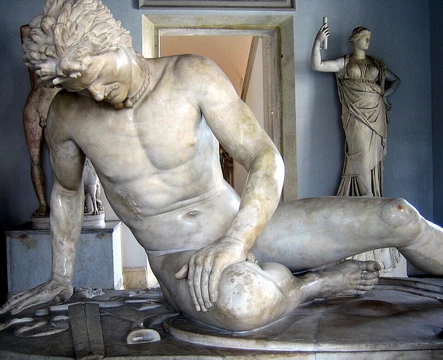
Sculpture is the three-dimensional practice of shaping, carving, casting, or assembling materials like stone, metal, clay, or wood into freestanding or relief artworks. Unlike painting or drawing, it occupies real space and is meant to be experienced from multiple angles.
Who are the most celebrated figures in sculpture history?
Names that dominate the conversation include Michelangelo (David, Pietà), Auguste Rodin (The Thinker, The Kiss), and Constantin Brâncuși (Bird in Space). More contemporary anchors include Barbara Hepworth, Jeff Koons, and Ai Weiwei.
Where should a complete beginner start learning about sculpture?
A good entry path is visiting a major museum's sculpture galleries—starting with classical Greek and Roman works, then moving through the Renaissance and into modern pieces. Pairing that visit with a short documentary on how artists choose and work with materials builds a solid foundation.
What are the core techniques a sculptor uses?
The main methods are carving (subtracting material), modeling (adding and shaping clay or wax), casting (pouring molten metal into a mold), and assembling (welding or joining found pieces). Most large-scale works combine several of these in sequence.
What is the oldest known sculpture in the world?
The Venus of Berekhat Ram, a small flint figurine dated to roughly 400,000 years ago, is often cited as the earliest candidate, though it remains debated. The undisputed oldest widely accepted example is the Venus of Hohle Fels, a mammoth-ivory figure from about 40,000 years ago found in Germany.
What's the difference between relief sculpture and free-standing sculpture?
Relief sculpture projects outward from a flat background—think of a coin's raised image or a tomb panel—while free-standing (or 'in the round') sculpture is fully three-dimensional and can be walked around. Relief is further split into high relief (deeply projecting) and low/bas relief (shallow carving).
Why is Michelangelo's David considered a landmark moment?
Carved from a single block of Carrara marble between 1501 and 1504, it redefined the human figure's idealized proportion and psychological tension for the Renaissance. It became a symbol of Florentine civic pride and set a benchmark that sculptors have referenced for over five centuries.
How does the lost-wax casting process work?
An artist sculpts a figure in wax, encases it in a ceramic shell, melts the wax out, and pours molten bronze into the resulting cavity. Once the metal cools, the shell is broken away, leaving a solid bronze replica of the original model.
What are a few 'must-know' sculptures for any fan of the medium?
Rodin's The Kiss, Michelangelo's Pietà, Brâncuși's Bird in Space, and the Moai heads of Rapa Nui are frequently cited as essential touchstones. They span different eras, materials, and cultural contexts, giving a quick cross-section of the field.
How has sculpture changed from antiquity to the present day?
It moved from religious and commemorative stone and bronze work in ancient and medieval periods, through the naturalistic Renaissance, into the fragmented forms of Cubism and Abstract Expressionism, and now into large-scale public installations, digital 3D printing, and participatory works. The material palette and the idea of what 'sculpture' can be have expanded enormously.